


Say goodbye to back pain with a chair that encourages dynamic sitting
Have you heard of dynamic sitting? It is a special form of sitting that combines relaxed and active sitting. Yes, you heard it right – you can strengthen your body’s muscles while sitting, and help improve your fitness and well-being. Active sitting activates your back and abdominal muscles, which helps you to correct your posture and relieve pain in your lower back, lumbar spine and shoulder girdle.
An office chair that allows you to sit dynamically is the SpinaliS – a premium product whose design mimics sitting on a fitness ball, but with a significant advantage – it gives you the opportunity to rest. In a relaxed sitting position, you will be able to relax a little and prevent pain and fatigue if you sit for long periods of time. Don’t delay and do something good for your body – try our ergonomically designed SpinaliS office chair and experience a whole new dimension of health-friendly sitting.
Learn about active and relaxed sitting
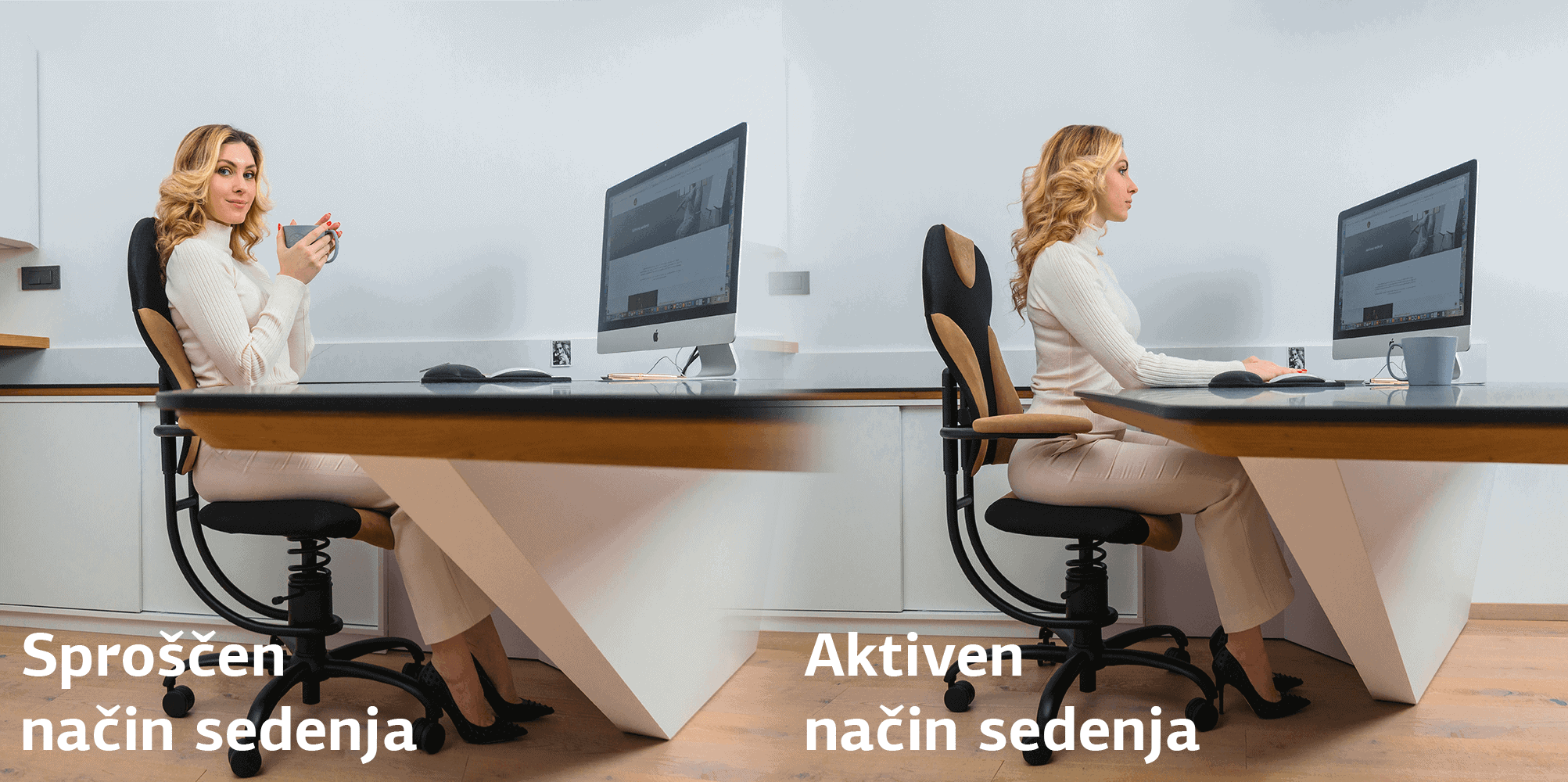
Our innovative SpinaliS office chair allows users to sit in two ways: active and relaxed, while supporting correct posture at all times. And you can easily adjust your sitting position by changing your position on the seat.
But to give you an idea of exactly what we’re talking about, we’ve put together an explanation of the two sitting styles offered by the SpinaliS premium ergonomic office chair:
- aktivno sedenje na stolu SpinaliS poteka takrat, ko sedite na sredini sedala. Pri tem načinu telo ves čas aktivno ohranja ravnotežje, saj se sedalo premika skladno z vašimi premiki. Pri tem so ves čas aktivirane zlasti hrbtne in trebušne mišice ter mišice medeničnega dna. Ker večji del obremenitev prevzamejo prav mišice, se bistveno zmanjša obremenitev na občutljiva vretenca. Posledično med sedenjem ohranjate pravilno držo, ki preprečuje bolečine v hrbtu in utrujenost po celodnevnem sedenju;
- sproščeno sedenje pa je omogočeno takrat, ko se presedete proti zadnjemu delu sedeža in se udobno naslonite na naslon za hrbet. Ob tem učinkovito razbremenite vaše mišice, vendar je drža še vedno ustrezna – sedalo je namreč ves čas gibljivo, zato je telo aktivno in tako ohranja ravnotežje.
Improved fitness ball
Have you ever had the opportunity to sit on a fitness ball? For those of you who have tried sitting like this, you probably know what it feels like when your body is sitting still but still active. Our premium product gives you a similar experience, but also offers another great customisation – the ability to take the strain off your muscles. Sitting on an orthopaedic ball is the best way to do it, but it doesn’t give you the option of resting. Muscles therefore fatigue when sitting for long periods of time, which can lead to pain and minor injuries. At SpinaliS, we have easily solved this problem with the relaxed sitting function.
Why switch to SpinaliS?
The problem with traditional ergonomic chairs is the fixed seat. When sitting, the spine literally breaks at the sacrum with every tilt of the body, resulting in pain and potentially injury.
The opposite is true of the SpinaliS office chair, where the seat is flexible. It follows even the slightest tilt of the body, keeping your spine in the correct position at all times. In addition, the SpinaliS team also advises you to exercise regularly in order to maintain a healthy spine for every customer. Even during working hours, get up several times to stretch and walk around the room. This will also help to ensure adequate blood circulation, clear your head and prevent excessive fatigue.
Try it!
You can also try out your new ergonomic SpinaliS office chair for free. Because we understand that people are different, we’ve included a wide range of chairs to suit different body types. You can choose an office chair with our expert help and then try it out in practice. This way you’ll know first-hand whether the model is the right fit for you. And we’re confident that your dynamic seating experience will be truly exceptional.
Research carried out by the SLOfit project shows an alarming trend of increasing proportion of overweight children in Slovenia. The percentage of overweight children ranges between 20 and 24%, which leads to reduced physical fitness, especially in the area of endurance. Experts note that children’s aerobic capacity is declining markedly, as can be seen in the results of tests such as the 600-metre dash. Children aged 11-13 run this distance on average 7 to 8 seconds slower today than they did 20 years ago.
See more ...
Spring tiredness and back pain – how to help yourself?
As the days get longer and nature wakes up, we would like to see more energy. But many people feel the opposite at this ...

Seasonal winter recipes for great well-being
Winter is a time when the body naturally seeks warmer, more nutritious and more filling food. Cold days, less sunshine ...

How to incorporate more exercise into your daily routine
Given the pace of our lives, we often don’t have the time or the will to exercise. Being tied to modern ...

Nutrition tips for more energy and better well-being during the winter months
Pozimi pogosto občutimo manj energije. To se zgodi zaradi različnih dejavnikov, npr. manjša količina dnevne ...

How can we make sure children get enough exercise in winter?
Making sure children get enough exercise, even in winter, is a challenge many parents face. Cold weather, shorter days ...

Make 2025 a year without back pain
The start of 2025 is a great opportunity to make a healthier lifestyle choice. One of the most common problems we face ...

5 simple exercises to relax after a long day
Long, tiring days, often spent in front of a computer, put a strain on our bodies. This is felt especially in the neck, ...

Choose the perfect gift!
The festive season is a time of joy, warmth and giving. But finding the perfect gift for a loved one is not always ...

How important is sitting ergonomics for children’s health?
The first years of life have a crucial influence on the development of the spine. Especially during the period when ...

Degenerative changes in the spine caused by sitting?
Degenerative changes in the spine are … a natural ageing process that affects various body structures (cartilage, ...

How to stay vital in the cold months?
The colder months, autumn and winter, are a bit more challenging for maintaining vitality and general well-being. Our ...

Discover our range of office chairs and choose the best one for you
Choosing the right office chair is crucial for comfort, correct posture and spinal support when sitting for long ...

Which Spinalis chairs are best for children?
Children’s bodies are constantly developing and growing. That’s why their posture is so important. If ...

Signs that your office chair is destroying your spine
Signs that your office chair is destroying your spine Modern lifestyles often require us to spend a lot of time ...